Free to start · Not medical advice

Health Library
AutoimmuneCondition guide

Psoriasis

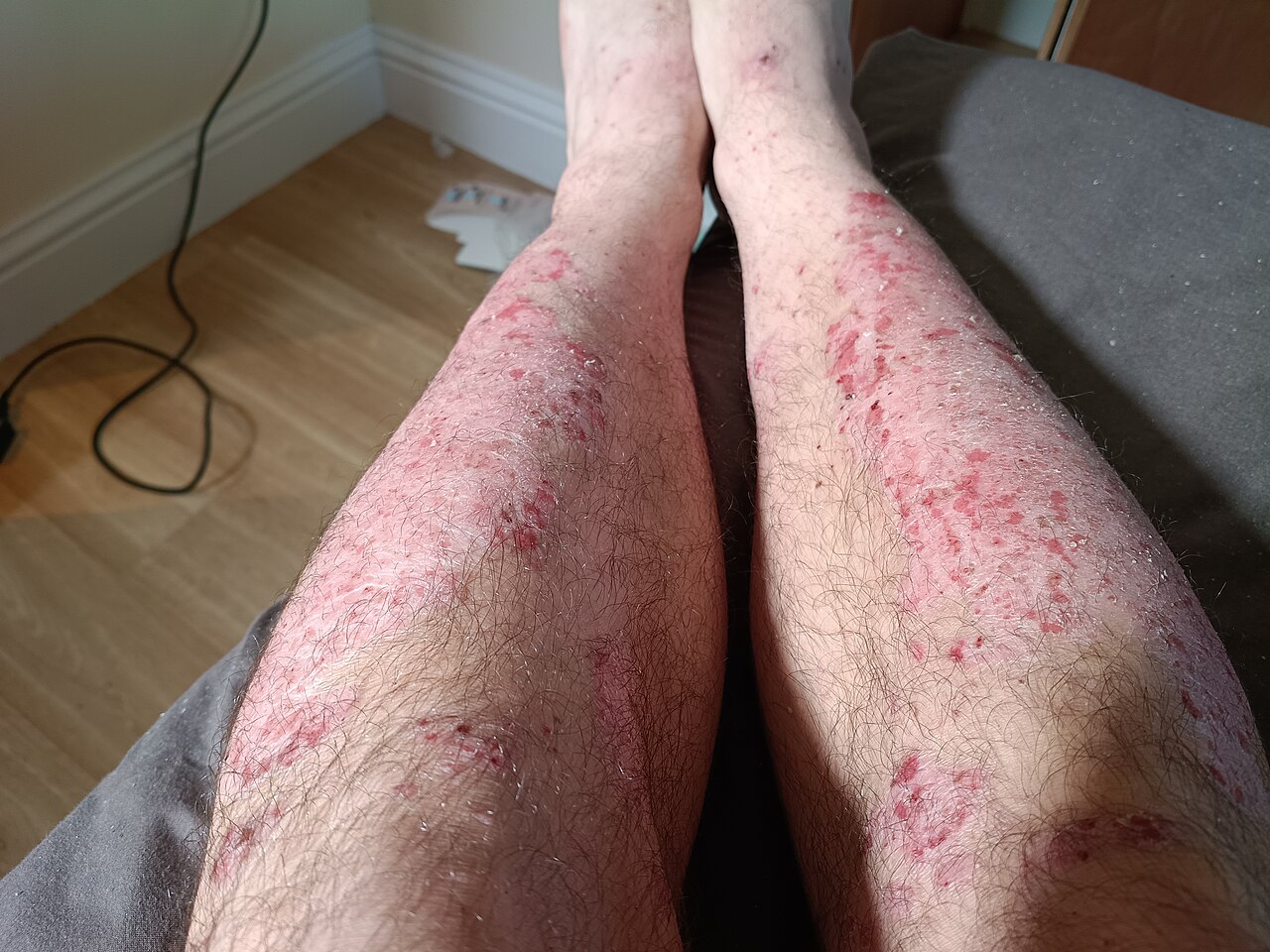
In psoriasis, an overactive immune system makes skin cells multiply too quickly, causing thick, scaly, inflamed patches, often on the scalp, elbows, and knees. Symptoms can flare and then ease. Psoriasis is linked to psoriatic arthritis and other conditions, and many treatments can keep symptoms under control.

Psoriasis — educational image

Image: Drb206 · CC BY 4.0 · Source

Clinically reviewed

This source-backed guide has completed independent clinical review.

Common signs and symptoms

Symptoms vary and often come and go in flares.

  • Thick, red patches with silvery-white scales that itch or burn, often on the elbows, knees, scalp, trunk, palms, or soles.
  • Dry, cracked skin that may itch or bleed.
  • Thick, ridged, or pitted nails, and poor sleep.
  • Stiff, swollen, or painful joints, which may be a sign of psoriatic arthritis.

Sources [1]

What may contribute

Psoriasis involves a mix of genetic and environmental factors.

  • Overactive immune cells set off rapid production of skin cells.
  • Many people with psoriasis have a family history of it.
  • Infections, especially strep and HIV, some medicines, smoking, and obesity can increase risk.
  • Stress, cold weather, skin injuries, and infections can trigger flares.

Sources [1]

How it is evaluated

Diagnosis is usually based on an exam of the skin, scalp, and nails.

  • The doctor examines your skin, scalp, and nails.
  • Questions cover symptoms, recent illness or stress, medicines, family history, and joint tenderness.
  • A small skin sample may be checked under a microscope to rule out conditions that look similar.

Sources [1]

Treatment and ongoing care

There is no cure, but treatments can keep symptoms under control.

  • Topical treatments such as corticosteroids, vitamin D-based medicines, and retinoids for mild to moderate disease.
  • Phototherapy with ultraviolet light, often used when large areas are affected.
  • Pills or injections such as methotrexate, PDE4 or TYK2 inhibitors, and biologic medicines for moderate to severe disease.
  • Treatment choice depends on the type, severity, location, and possible side effects.

Sources [1], [2]

Day-to-day support

Daily skin care and healthy habits can reduce flares.

  • Bathe in lukewarm water with a mild soap that has added oils, then moisturize while skin is still damp.
  • Maintain a healthy weight; a Mediterranean diet has helped in several studies.
  • If you smoke, make a plan to quit, and drink alcohol only in moderation.
  • Learn and avoid your triggers, and ask your doctor about small amounts of sunlight.

Sources [1]

When to seek prompt help

Some changes need prompt attention.

  • See your doctor soon for stiff, swollen, or painful joints, because untreated psoriatic arthritis can cause lasting damage.
  • Seek prompt care for red, scaly skin over most of the body, which can be a serious form of psoriasis.
  • Seek care for widespread pus-filled bumps surrounded by red skin.
  • Reach out to a mental health professional if anxiety or low mood affects daily life.

Sources [1]

Research basis

Sources and review status

Sources were checked on October 16, 2026. This guide is version 2026.10. This source-backed guide has completed independent clinical review.

  1. [1]
    Psoriasis

    NIH National Institute of Arthritis and Musculoskeletal and Skin Diseases (2023)

  2. [2]
    Joint AAD-NPF guidelines of care for the management and treatment of psoriasis with biologics

    Journal of the American Academy of Dermatology (2019) · DOI 10.1016/j.jaad.2018.11.057 · PMID 30772098

Commonly involved specialists

These are the types of clinicians who are frequently involved in evaluating or supporting this condition.

DermatologistRheumatologistPrimary care clinicianMental health professional

Factors to discuss with a qualified professional

Bringing organized notes on these topics can help make your appointment more focused.

  • Where patches appear and how they have changed
  • Possible triggers such as stress, infections, or new medicines
  • Any joint pain, stiffness, or swelling
  • How symptoms affect sleep, work, and mood

Things you might track over time

A symptom journal can help you and your clinician review patterns together.

Skin flares
Itching
Joint symptoms
Possible triggers

This information is educational and does not provide a diagnosis or treatment plan. Discuss your individual situation with a qualified healthcare professional.

Find specialists near you

Search our directory of US doctors for the specialists commonly involved in psoriasis care, then add your state or city.

Open Find Care