Plantar Fasciitis (Heel Pain)
Heel problems often come from too much stress on the heel bone and the tissues around it. Plantar fasciitis is inflammation of the plantar fascia, the band of tissue that runs along the bottom of the foot. Most heel pain improves with conservative treatment, and surgery is rarely needed.
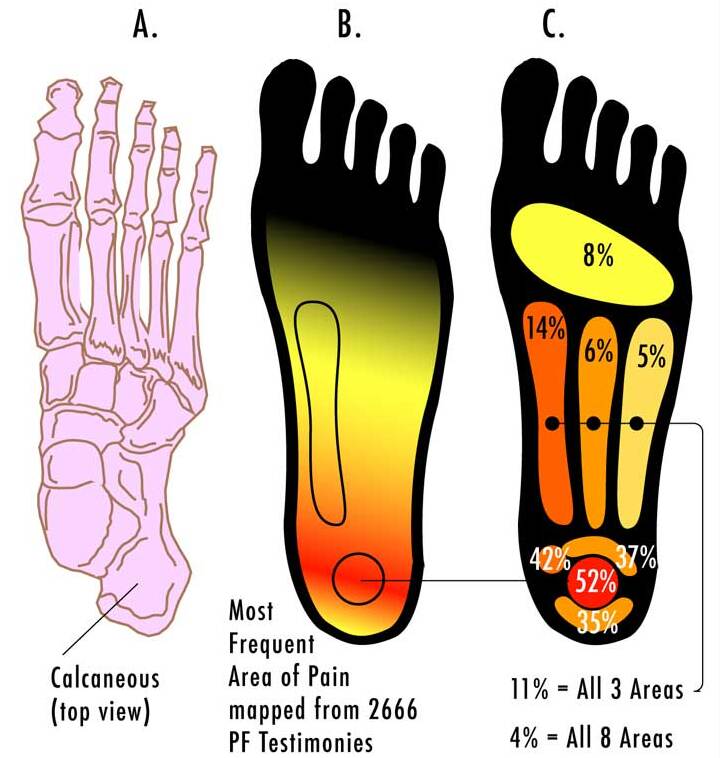
Image: Kosi Gramatikoff · Public domain · Source
In this guide
This source-backed guide has completed independent clinical review.
What may contribute
Too much stress on the heel and surrounding tissue is the usual cause.
- Injuries and repeated impact from walking, running, or jumping.
- Shoes that don't fit well or aren't made well.
- Being overweight.
- Conditions such as rheumatoid arthritis and gout can also cause heel problems.
Sources [1]
How it is evaluated
Diagnosis is usually made from your symptoms and an exam of the foot.
- A clinician asks about the pain pattern and examines the heel and foot.
- Other causes of heel pain, such as tendinitis or bursitis, are considered.
- Imaging is generally reserved for when another cause is suspected or symptoms do not improve.
Treatment and ongoing care
Most people improve with conservative care.
- Rest, medicines, exercises, taping, and special shoes or inserts.
- Physical therapy guidelines support calf and plantar fascia stretching, manual therapy, taping, and foot orthoses.
- Night splints may help some people.
- Surgery is rarely needed.
When to seek prompt help
Some heel pain needs prompt evaluation.
- Get care for heel pain after an injury if you cannot put weight on the foot or there is significant swelling or bruising.
- See a clinician if pain and swelling do not ease after a few days of rest.
Sources [3]
Go deeper
Recommended reading
The free guide covers essential medical and safety information. Books add long-form context, worksheets, preparation, and recovery detail; they do not replace care from a qualified professional.
Recommendations under editorial review
No title has been approved for this topic yet. We only add a recommendation when its scope and condition-specific value are clear.
Research basis
Sources and review status
Sources were checked on October 16, 2026. This guide is version 2026.10. This source-backed guide has completed independent clinical review.
- [1]Heel Injuries and Disorders
MedlinePlus, U.S. National Library of Medicine
- [2]Heel Pain - Plantar Fasciitis: Revision 2023
Journal of Orthopaedic & Sports Physical Therapy (2023) · DOI 10.2519/jospt.2023.0303 · PMID 38037331
- [3]Sports Injuries
NIH National Institute of Arthritis and Musculoskeletal and Skin Diseases
Commonly involved specialists
These are the types of clinicians who are frequently involved in evaluating or supporting this condition.
Factors to discuss with a qualified professional
Bringing organized notes on these topics can help make your appointment more focused.
- When the heel pain is worst, such as with first steps in the morning
- Your usual shoes and daily standing or walking time
- Recent changes in exercise or activity
- Treatments you have tried, such as stretching or inserts
Things you might track over time
A symptom journal can help you and your clinician review patterns together.
This information is educational and does not provide a diagnosis or treatment plan. Discuss your individual situation with a qualified healthcare professional.
Find specialists near you
Search our directory of US doctors for the specialists commonly involved in plantar fasciitis (heel pain) care, then add your state or city.