Free to start · Not medical advice

Health Library
MusculoskeletalCondition guide

Osteoporosis

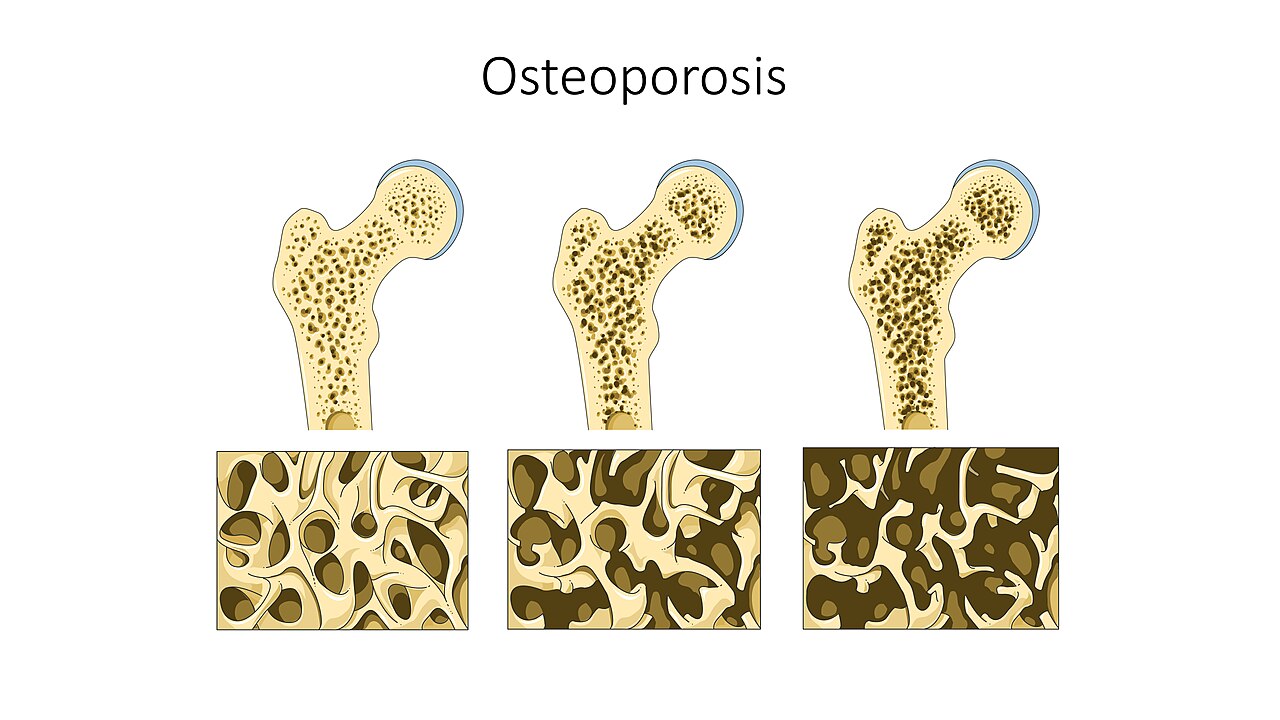
Osteoporosis develops when bone mineral density and bone mass decrease or bone structure changes, making bones weaker and more likely to break. It is called a "silent" disease because there are usually no symptoms until a bone breaks, most often in the hip, spine, or wrist. Screening, a bone-healthy lifestyle, fall prevention, and medicines can help prevent fractures.

Osteoporosis — educational image

Image: Laboratoires Servier · CC BY-SA 3.0 · Source

Clinically reviewed

This source-backed guide has completed independent clinical review.

Common signs and symptoms

Most people have no symptoms until a bone breaks.

  • Bones can break from a minor fall, such as from standing height, or from bending, lifting, or even coughing.
  • A spine fracture can cause severe back pain, loss of height, or a stooped posture.
  • Fractures happen most often in the hip, spine, and wrist.

Sources [1]

What may contribute

Osteoporosis develops when more bone is broken down than replaced.

  • Risk rises with age and is higher in women, especially after menopause.
  • A family history of osteoporosis or hip fracture, a slim frame, and low estrogen or testosterone increase risk.
  • Long-term use of some medicines, such as glucocorticoids, certain seizure and cancer medicines, and proton pump inhibitors, can contribute.
  • Low calcium, vitamin D, or protein, smoking, heavy drinking, and inactivity increase bone loss.

Sources [1]

How it is evaluated

Osteoporosis is usually found through routine screening.

  • The U.S. Preventive Services Task Force recommends screening women 65 and older and younger women with risk factors.
  • A DXA scan of the hip and spine measures bone mineral density and is the most reliable way to diagnose it.
  • A short fracture risk assessment can estimate the chance of breaking a bone in the next 10 years.
  • The exam may check height, posture, balance, walking, and muscle strength.

Sources [1], [2]

Treatment and ongoing care

Treatment aims to slow or stop bone loss and to prevent fractures.

  • Medicines can slow bone loss or help rebuild bone.
  • Enough calcium, vitamin D, and protein, with supplements if your diet falls short and your clinician agrees.
  • Regular weight-bearing, strength, and balance exercise.
  • Treating underlying causes, such as adjusting a medicine that causes bone loss when that is possible.

Sources [1], [2]

Day-to-day support

Daily choices protect your bones and reduce falls.

  • Eat calcium-rich foods such as low-fat dairy, leafy greens, broccoli, canned fish with bones, and fortified foods.
  • Walk and do strength and balance exercises, but avoid movements that twist the spine or bend forward from the waist.
  • Avoid smoking and secondhand smoke, and drink alcohol only in moderation.
  • Take steps to prevent falls, and ask your clinician which supplements, if any, you need.

Sources [1]

When to seek prompt help

Possible fractures need medical evaluation.

  • Seek prompt care for sudden severe back pain or noticeable loss of height, which can signal a spine fracture.
  • Get urgent care after a fall if you have severe pain, swelling, or cannot put weight on a limb.

Sources [1]

Research basis

Sources and review status

Sources were checked on October 16, 2026. This guide is version 2026.10. This source-backed guide has completed independent clinical review.

  1. [1]
    Osteoporosis

    NIH National Institute of Arthritis and Musculoskeletal and Skin Diseases

  2. [2]
    The clinician's guide to prevention and treatment of osteoporosis

    Osteoporosis International (2022) · DOI 10.1007/s00198-021-05900-y · PMID 35478046

Commonly involved specialists

These are the types of clinicians who are frequently involved in evaluating or supporting this condition.

Primary care clinicianEndocrinologistRheumatologistPhysical therapist

Factors to discuss with a qualified professional

Bringing organized notes on these topics can help make your appointment more focused.

  • Any past fractures and how they happened
  • Medicines you take long term, such as steroids or acid reducers
  • Family history of osteoporosis or hip fracture
  • Your calcium, vitamin D, and exercise habits

Things you might track over time

A symptom journal can help you and your clinician review patterns together.

Falls or near-falls
Height changes
Calcium and vitamin D intake
Exercise sessions

This information is educational and does not provide a diagnosis or treatment plan. Discuss your individual situation with a qualified healthcare professional.

Find specialists near you

Search our directory of US doctors for the specialists commonly involved in osteoporosis care, then add your state or city.

Open Find Care