Free to start · Not medical advice

Health Library
DigestiveCondition guide

Eosinophilic Esophagitis (EoE)

In eosinophilic esophagitis, white blood cells called eosinophils build up in the esophagus, causing inflammation, pain, and trouble swallowing. It is thought to be an immune or allergic reaction to foods or to substances in the environment. It is being diagnosed more often, and some people who think they have reflux actually have EoE.

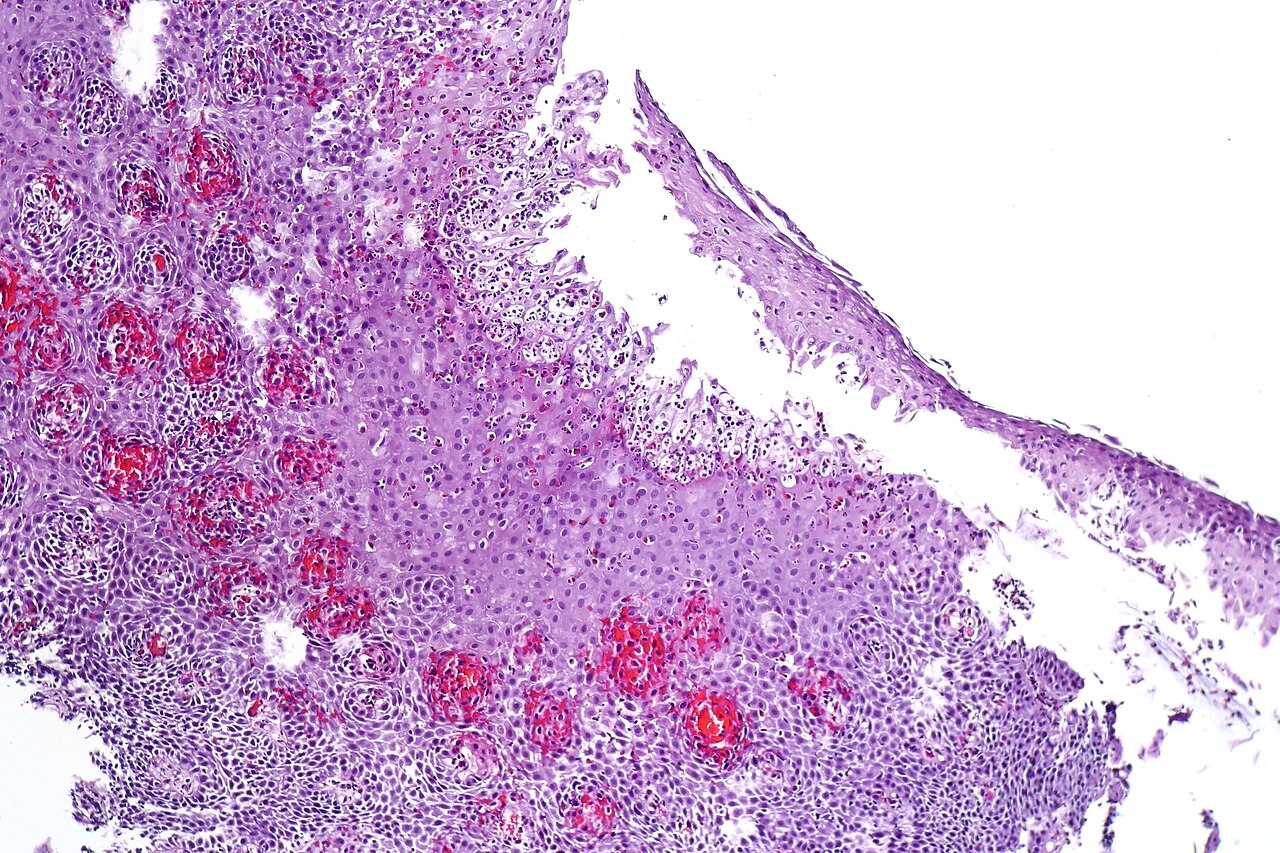
Eosinophilic Esophagitis (EoE) — educational image

Image: CoRus13 · CC BY-SA 4.0 · Source

Clinically reviewed

This source-backed guide has completed independent clinical review.

Common signs and symptoms

The most common symptoms depend on age.

  • Adults: trouble swallowing solid foods, food getting stuck, heartburn, or chest pain.
  • Older children: vomiting, belly pain, trouble swallowing, or poor appetite.
  • Infants and toddlers: feeding problems, vomiting, or poor weight gain and growth.
  • At any age, reflux that does not get better with medicines.

Sources [1]

What may contribute

Researchers think EoE is an immune or allergic reaction.

  • Possible triggers include foods and environmental substances such as dust mites, animal dander, pollen, and molds.
  • Certain genes may also play a role.
  • It is more common in males, in people with hay fever, eczema, asthma, or food allergies, and in families with EoE.

Sources [1]

How it is evaluated

A biopsy is the only way to confirm EoE.

  • A thorough history, because other conditions can cause the same symptoms.
  • An upper GI endoscopy can show white spots, rings, narrowing, or inflammation, though not everyone has these signs.
  • Biopsies are checked for a high number of eosinophils.
  • Blood or allergy tests may follow to look for specific allergies.

Sources [1], [2]

Treatment and ongoing care

There is no cure, but treatment can manage symptoms and prevent further damage.

  • Swallowed topical steroids to control inflammation.
  • Proton pump inhibitors, which may help reflux symptoms and decrease inflammation.
  • Elimination or elemental diets, with repeat endoscopies to see which foods are tolerated.
  • Monoclonal antibody medicines for adults and children over 12, and dilation to stretch a narrowed esophagus.

Sources [1], [2]

Day-to-day support

Diet-based treatment works best with expert support.

  • Work with your care team and a dietitian if you follow an elimination diet.
  • Keep a record of foods that seem linked to symptoms to share with your care team.
  • Keep follow-up appointments and scheduled endoscopies.

Sources [1], [2]

When to seek urgent help

Food that will not pass needs emergency care.

  • Seek emergency care if food is stuck in your throat or chest and will not go down, or you cannot swallow saliva.
  • Seek urgent care for chest pain, which can have other serious causes.
  • Report weight loss, or poor weight gain or growth in a child, promptly.

Sources [1], [2]

Research basis

Sources and review status

Sources were checked on October 16, 2026. This guide is version 2026.10. This source-backed guide has completed independent clinical review.

  1. [1]
    Eosinophilic Esophagitis

    MedlinePlus, U.S. National Library of Medicine

Commonly involved specialists

These are the types of clinicians who are frequently involved in evaluating or supporting this condition.

GastroenterologistAllergist/immunologistRegistered dietitianPrimary care clinician

Factors to discuss with a qualified professional

Bringing organized notes on these topics can help make your appointment more focused.

  • Foods that seem hard to swallow or get stuck
  • Allergies, asthma, or eczema you or your family have
  • Reflux medicines you have tried and whether they helped
  • Any weight loss or, in children, feeding or growth concerns

Things you might track over time

A symptom journal can help you and your clinician review patterns together.

Swallowing difficulty
Food-related symptoms
Heartburn
Diet changes

This information is educational and does not provide a diagnosis or treatment plan. Discuss your individual situation with a qualified healthcare professional.

Find specialists near you

Search our directory of US doctors for the specialists commonly involved in eosinophilic esophagitis (eoe) care, then add your state or city.

Open Find Care