Free to start · Not medical advice

Health Library
Digestive (IBD)Condition guide

Crohn's Disease

Crohn's disease is a form of inflammatory bowel disease. Keeping organized notes on symptoms and diet can support conversations with gastroenterology.

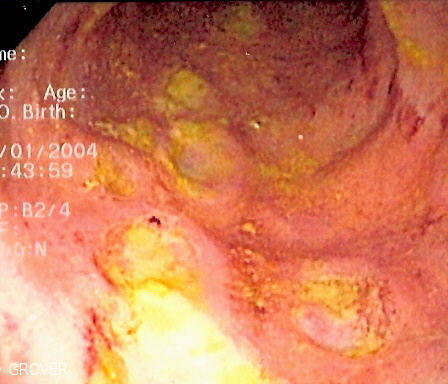
Crohn's Disease — educational image

Image: Samir · Public domain · Source

Clinically reviewed

This source-backed guide has completed independent clinical review.

Common signs and symptoms

Crohn's disease can affect any part of the digestive tract and symptoms may alternate with remission.

  • Ongoing or recurrent diarrhea and abdominal cramping or tenderness.
  • Reduced appetite, nausea, vomiting, or unintentional weight loss.
  • Fatigue, fever, or anemia-related weakness.
  • Mouth sores or pain, swelling, drainage, or fissures around the anus.
  • Joint pain, skin changes, or painful red eyes may accompany bowel symptoms.

Sources [1]

What may contribute

Abnormal immune reactions, genes, the intestinal microbiome, and environmental exposures appear to interact.

  • The exact cause is unknown.
  • Having a parent or sibling with inflammatory bowel disease increases risk.
  • Cigarette smoking increases the chance of Crohn's disease and is associated with a worse course.
  • Food and stress do not cause Crohn's disease, although tolerance and symptoms can change during active illness.

Sources [1]

How it is evaluated

Testing establishes whether inflammation is present, where it is located, and whether complications exist.

  • Evaluation includes symptoms, medicines, smoking, medical and family history, and examination.
  • Blood tests may assess anemia, inflammation, infection, nutrition, liver function, and treatment safety.
  • Stool tests can evaluate intestinal inflammation and exclude infection.
  • Ileocolonoscopy and other endoscopy allow direct examination and biopsies.
  • CT or MR enterography and selected capsule endoscopy may assess small bowel disease, strictures, fistulas, or abscesses.

Sources [1], [2]

Treatment and ongoing care

Treatment aims to control inflammation, maintain remission, and prevent complications.

  • Short-term corticosteroids or selected nutrition-based therapy may induce remission but are not long-term maintenance.
  • Immune-modifying, biologic, or targeted medicines may be selected according to disease pattern and safety factors.
  • Dietitian-supported care can address weight loss, reduced intake, malabsorption, or deficiencies.
  • Antibiotics, drainage, or procedures may be needed for abscesses, fistulas, or infection.
  • Surgery can treat obstruction, strictures, fistulas, bleeding, or uncontrolled disease but does not prevent all recurrence.

Sources [1], [2]

Day-to-day support

There is no universal Crohn's diet, and major restriction can worsen nutrition.

  • Take medicines as agreed and attend safety, disease, vaccination, and cancer-surveillance reviews.
  • Track stool frequency, bleeding, pain, temperature, appetite, weight, energy, and perianal symptoms.
  • Aim for adequate fluids and a varied, nutritionally complete diet.
  • Consult a clinician or dietitian before major restriction or starting supplements.
  • Do not smoke and seek practical or mental-health support when needed.

Sources [1], [2]

When to seek urgent help

Obstruction, severe bleeding, abscess, and dehydration can require emergency care.

  • Seek emergency care for severe or rapidly worsening abdominal pain or swelling.
  • Repeated vomiting with inability to pass stool or gas can indicate obstruction.
  • Heavy bleeding, black stools, fainting, confusion, or severe dehydration are emergencies.
  • Seek same-day care for fever with marked abdominal or perianal pain, inability to keep fluids down, or very little urine.

Sources [1], [2]

Research basis

Sources and review status

Sources were checked on October 5, 2026. This guide is version 2026.10. This source-backed guide has completed independent clinical review.

  1. [1]
    Crohn's Disease

    NIH National Institute of Diabetes and Digestive and Kidney Diseases (2024)

  2. [2]
    ACG Clinical Guideline: Management of Crohn's Disease in Adults

    The American Journal of Gastroenterology (2025) · DOI 10.14309/ajg.0000000000003465 · PMID 40701562

Commonly involved specialists

These are the types of clinicians who are frequently involved in evaluating or supporting this condition.

GastroenterologistPrimary care clinicianDietitian

Factors to discuss with a qualified professional

Bringing organized notes on these topics can help make your appointment more focused.

  • Digestive symptom patterns
  • Diet and foods that seem to affect symptoms
  • Energy and weight changes
  • Prior tests or imaging

Things you might track over time

A symptom journal can help you and your clinician review patterns together.

Symptom frequency
Diet notes
Energy levels
Weight

This information is educational and does not provide a diagnosis or treatment plan. Discuss your individual situation with a qualified healthcare professional.

Find specialists near you

Search our directory of US doctors for the specialists commonly involved in crohn's disease care, then add your state or city.

Open Find Care