Free to start · Not medical advice

Health Library
MusculoskeletalCondition guide

Carpal Tunnel Syndrome

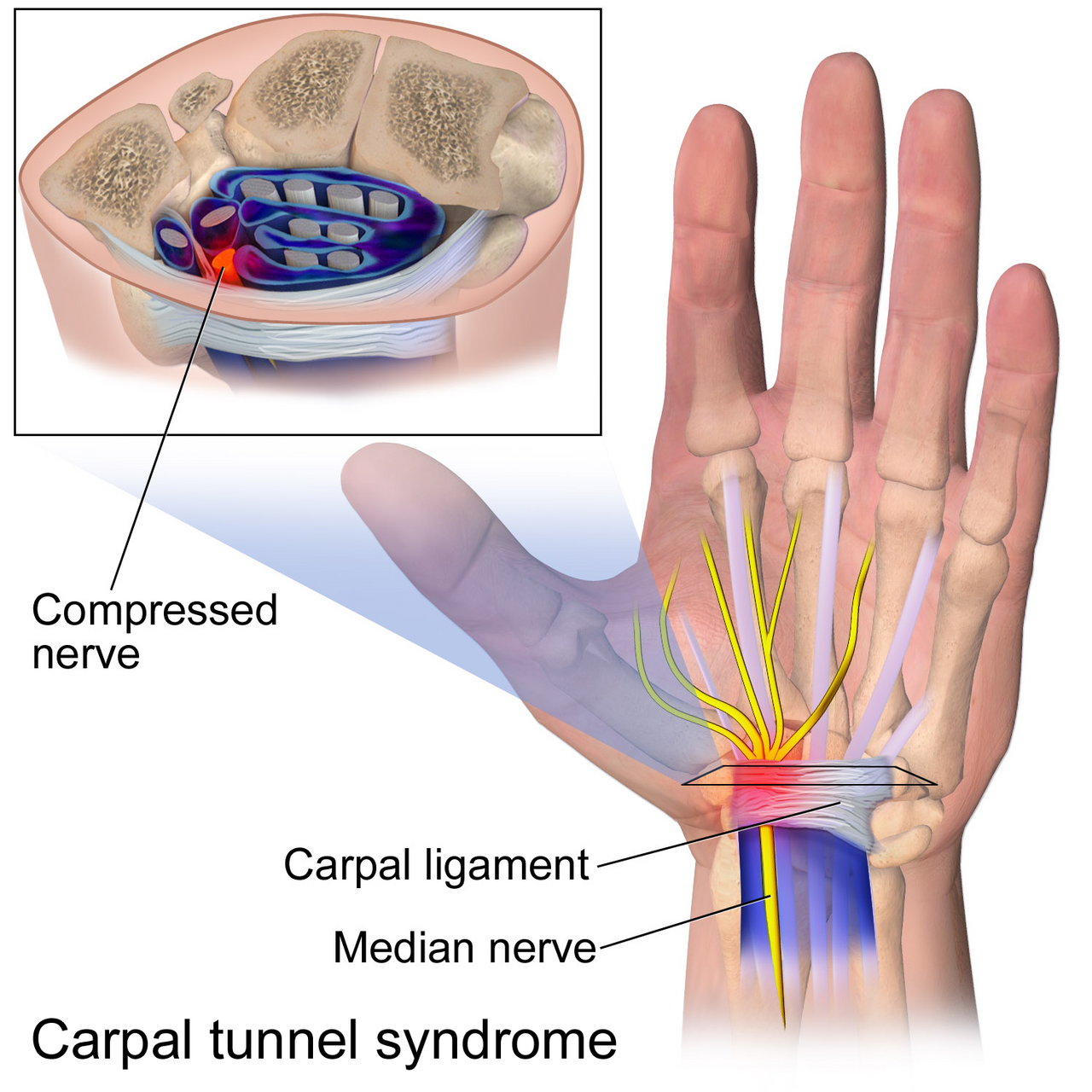
The median nerve runs through a narrow tunnel at the wrist into the hand and gives feeling to the thumb and first fingers. When it is squeezed, people can feel numbness, tingling, pain, or weakness. Treating it early helps prevent lasting nerve damage.

Carpal Tunnel Syndrome — educational image

Image: BruceBlaus · CC BY 3.0 · Source

Clinically reviewed

This source-backed guide has completed independent clinical review.

Common signs and symptoms

Symptoms usually start slowly and often appear first at night.

  • Numbness, tingling, or burning in the thumb, index, and middle fingers, often in both hands.
  • Waking at night feeling you need to "shake out" your hand.
  • Later, symptoms during the day with driving, holding a phone, or reading.
  • Weak grip, trouble holding small objects, or fingers that feel swollen when they are not.

Sources [1], [2]

What may contribute

Several factors increase pressure on the median nerve.

  • Swollen or irritated tendons in the carpal tunnel can press on the nerve.
  • A wrist injury such as a sprain or fracture.
  • Diabetes, rheumatoid arthritis, thyroid problems, and fluid changes in pregnancy or menopause.
  • Repeated hand and wrist motions or vibrating tools; women are about three times more likely to have it.

Sources [1], [2]

How it is evaluated

Most cases can be diagnosed through a physical exam.

  • The doctor examines your hands, arms, shoulders, and neck, and checks feeling and thumb-muscle strength.
  • Lab tests and X-rays can look for diabetes, arthritis, or fractures.
  • Nerve conduction studies and electromyography measure how well the nerve and muscles work.
  • Ultrasound can show whether the median nerve is swollen.

Sources [1], [3]

Treatment and ongoing care

Treatment should begin early, starting with any underlying condition.

  • Wrist splints, usually worn at night, and rest.
  • Pain relievers and steroid pills or injections can ease symptoms for a time.
  • Nonsurgical treatments help short term but do not fix the underlying pressure on the nerve.
  • Carpal tunnel release surgery is an option for severe symptoms or when other treatments do not work; recovery can take months.

Sources [1], [2], [3]

Day-to-day support

Protecting your wrists can ease symptoms.

  • Keep your wrists in a natural position and use good posture.
  • Take breaks, vary tasks, and stretch your hands and wrists.
  • Keep your hands warm and arrange tools and your workspace to reduce strain.
  • Talk with your provider before trying yoga, acupuncture, or other complementary therapies.

Sources [2], [1]

When to seek prompt help

Constant numbness or weakness needs timely care.

  • See a provider promptly if numbness becomes constant or the muscles at the base of the thumb weaken, to help prevent permanent damage.
  • Call 911 for sudden numbness or weakness of the face, arm, or leg, especially on one side, which may be a stroke.

Sources [2]

Research basis

Sources and review status

Sources were checked on October 16, 2026. This guide is version 2026.10. This source-backed guide has completed independent clinical review.

  1. [1]
    Carpal Tunnel Syndrome

    NIH National Institute of Arthritis and Musculoskeletal and Skin Diseases (2023)

  2. [2]
    Carpal Tunnel Syndrome

    MedlinePlus, U.S. National Library of Medicine (2024)

  3. [3]
    American Academy of Orthopaedic Surgeons/ASSH Clinical Practice Guideline Summary: Management of Carpal Tunnel Syndrome

    Journal of the American Academy of Orthopaedic Surgeons (2025) · DOI 10.5435/JAAOS-D-24-01179 · PMID 39637428

Commonly involved specialists

These are the types of clinicians who are frequently involved in evaluating or supporting this condition.

Primary care clinicianHand or orthopaedic surgeonNeurologistOccupational therapist

Factors to discuss with a qualified professional

Bringing organized notes on these topics can help make your appointment more focused.

  • Which fingers feel numb or tingly and when
  • Whether symptoms wake you at night
  • Hand-intensive tasks at work or home
  • Conditions such as diabetes, thyroid disease, or arthritis

Things you might track over time

A symptom journal can help you and your clinician review patterns together.

Night-time symptoms
Numbness or tingling
Grip strength
Splint use

This information is educational and does not provide a diagnosis or treatment plan. Discuss your individual situation with a qualified healthcare professional.

Find specialists near you

Search our directory of US doctors for the specialists commonly involved in carpal tunnel syndrome care, then add your state or city.

Open Find Care