Bursitis
A bursa is a small, fluid-filled sac that cushions a bone and nearby muscles, tendons, or skin. Bursitis happens when a bursa becomes inflamed, often from overuse, repeated pressure, or an injury. It most often affects the shoulders, elbows, hips, or knees.
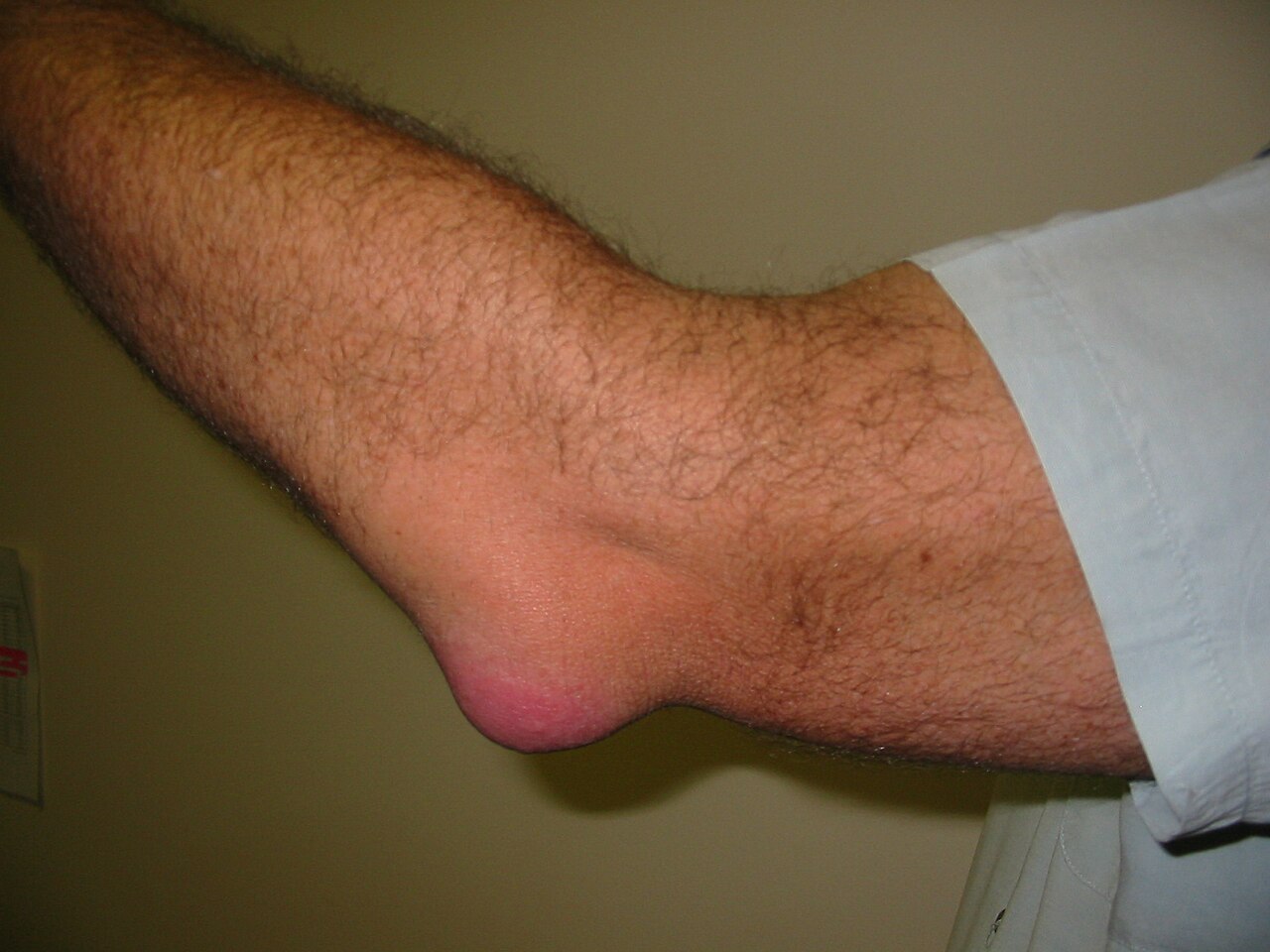
Image: NJC123 · Public domain · Source
In this guide
This source-backed guide has completed independent clinical review.
What may contribute
Overuse, pressure, or injury can inflame a bursa.
- Repeating the same motion many times, such as throwing a ball.
- Prolonged pressure, such as kneeling on a hard surface or leaning on the elbows.
- A one-time event such as a blow or fall.
- Putting stress on joints every day increases the risk.
Treatment and ongoing care
Most bursitis improves with simple measures.
- Rest, ice, and pain medicines are the first steps.
- If there is no improvement, a medicine may be injected into the area around the bursa.
- A rehabilitation program can rebuild strength and range of motion before returning to activity.
- Surgery may be considered if the joint does not improve after 6 to 12 months.
Day-to-day support
Protecting the joint helps prevent flare-ups.
- Use R-I-C-E for minor flare-ups: rest, ice for no more than 20 minutes at a time, compression, and elevation.
- Avoid kneeling or leaning on your elbows on hard surfaces for long periods.
- Increase activity gradually and stop movements that cause pain instead of working through it.
Sources [2]
When to seek prompt help
Some symptoms need a clinician rather than home care.
- See a clinician for severe pain, swelling, or bruising, or pain and swelling that do not ease after a few days.
- Get care if you cannot put any weight on the area or notice an obvious deformity.
- Seek prompt care if the swollen area becomes increasingly red, warm, or painful so infection can be ruled out.
Go deeper
Recommended reading
The free guide covers essential medical and safety information. Books add long-form context, worksheets, preparation, and recovery detail; they do not replace care from a qualified professional.
Recommendations under editorial review
No title has been approved for this topic yet. We only add a recommendation when its scope and condition-specific value are clear.
Research basis
Sources and review status
Sources were checked on October 16, 2026. This guide is version 2026.10. This source-backed guide has completed independent clinical review.
- [1]Bursitis
MedlinePlus, U.S. National Library of Medicine
- [2]Sports Injuries
NIH National Institute of Arthritis and Musculoskeletal and Skin Diseases
Commonly involved specialists
These are the types of clinicians who are frequently involved in evaluating or supporting this condition.
Factors to discuss with a qualified professional
Bringing organized notes on these topics can help make your appointment more focused.
- Activities or positions that bring on the pain
- Whether swelling began after an injury or pressure on the joint
- Treatments you have tried and how they helped
- Any warmth, redness, or fever
Things you might track over time
A symptom journal can help you and your clinician review patterns together.
This information is educational and does not provide a diagnosis or treatment plan. Discuss your individual situation with a qualified healthcare professional.
Find specialists near you
Search our directory of US doctors for the specialists commonly involved in bursitis care, then add your state or city.