Free to start · Not medical advice

Health Library
AutoimmuneCondition guide

Ankylosing Spondylitis

Ankylosing spondylitis is an inflammatory condition commonly discussed in relation to the spine and lower back, particularly stiffness that may improve with movement.

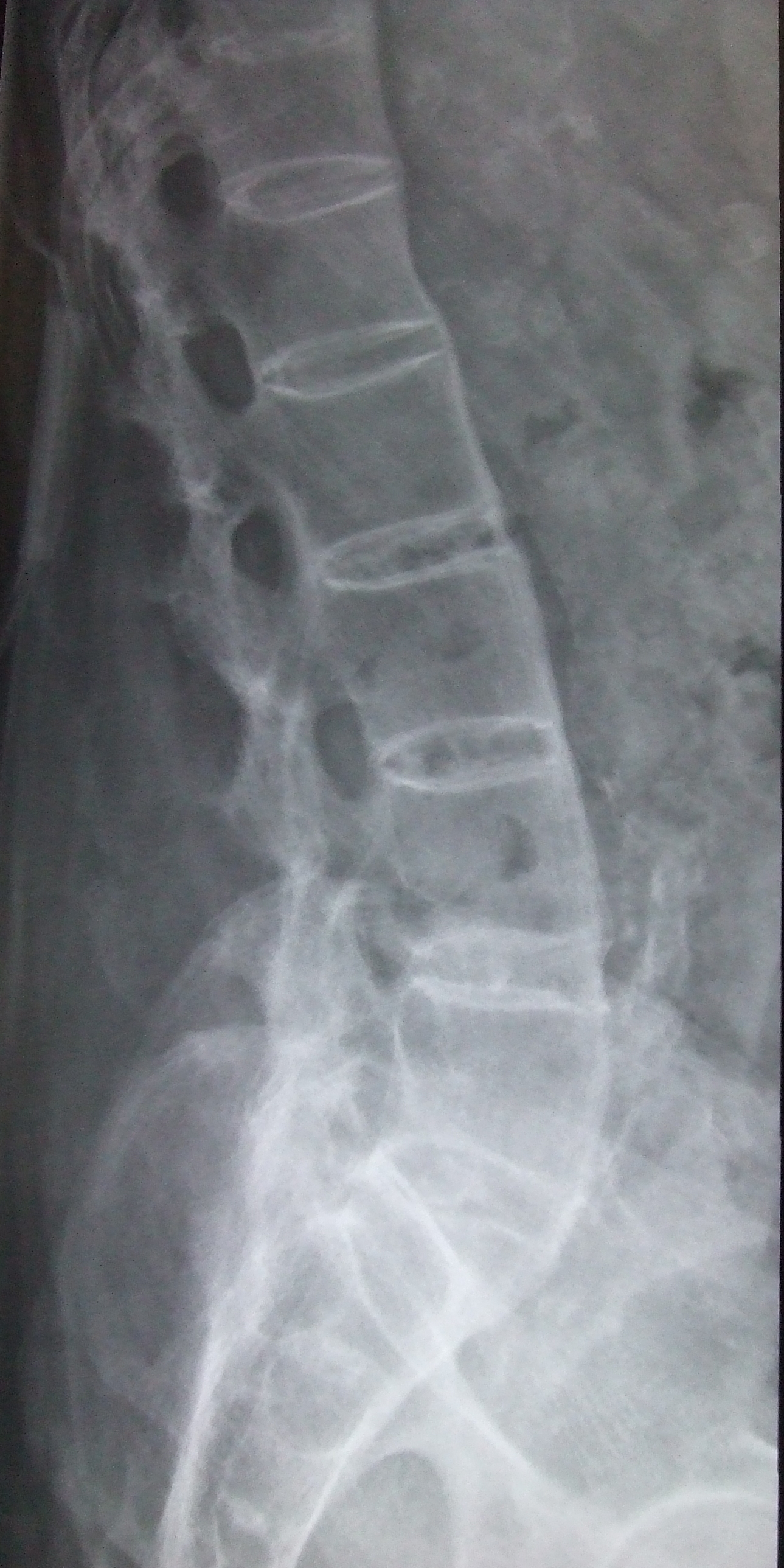
Ankylosing Spondylitis — educational image

Image: Glitzy queen00 · Public domain · Source

Clinically reviewed

This source-backed guide has completed independent clinical review.

Common signs and symptoms

Ankylosing spondylitis is part of the axial spondyloarthritis spectrum.

  • Persistent lower-back or buttock pain and stiffness, often beginning before age 45.
  • Pain may be worse after rest or at night and improve with movement.
  • Spinal flexibility can decrease and symptoms can fluctuate with flares.
  • Hips, shoulders, knees, heels, ribs, or other tendon attachments may be painful.
  • Eye inflammation, psoriasis, or inflammatory bowel symptoms may occur.

Sources [1]

What may contribute

Genetic susceptibility and environmental factors appear to influence immune-driven inflammation.

  • The exact cause is unknown.
  • HLA-B27 increases likelihood but does not establish a diagnosis.
  • Family history of spondyloarthritis increases risk.
  • The condition can affect people of any sex and can occur with normal inflammatory markers.

Sources [1]

How it is evaluated

A normal X-ray or blood test does not by itself exclude axial spondyloarthritis.

  • Evaluation considers the back-pain pattern, movement response, family history, and eye, skin, or bowel symptoms.
  • Examination may assess spinal and hip movement, posture, chest expansion, joints, and tendon attachments.
  • CRP or ESR may show inflammation but can be normal; HLA-B27 is supportive rather than definitive.
  • Sacroiliac-joint X-rays may identify radiographic disease, while MRI can detect earlier active inflammation.
  • Diagnosis usually integrates clinical findings and imaging with rheumatology assessment.

Sources [1], [2]

Treatment and ongoing care

Treatment aims to control inflammation and preserve mobility, function, and participation.

  • Education and individualized physiotherapy or exercise are core treatments.
  • Anti-inflammatory medicines are commonly considered first, with individual risk review.
  • Biologic or targeted medicines may be considered for persistently active disease.
  • Treatment choice may account for uveitis, psoriasis, or inflammatory bowel disease.
  • Surgery is uncommon but may be considered for severe joint damage, deformity, or unstable fracture.

Sources [1], [2]

Day-to-day support

Consistent movement is an important part of care, adjusted during flares rather than abandoned.

  • Continue recommended stretching, strengthening, posture, breathing, and aerobic exercise.
  • Break up long periods of sitting or inactivity.
  • Do not smoke; smoking is associated with poorer outcomes and lung function.
  • Track pain, stiffness, sleep, mobility, fatigue, and eye, skin, or bowel symptoms.
  • Ask about occupational support, assistive devices, or a written flare plan when needed.

Sources [1], [2]

When to seek urgent help

Eye inflammation and spinal injury need especially prompt assessment.

  • Painful red eye, light sensitivity, or blurred vision needs same-day eye assessment.
  • New or increased neck or back pain after even a modest fall needs urgent evaluation.
  • Call emergency services for new limb weakness or numbness, loss of bladder or bowel control, or severe breathing difficulty.
  • Seek prompt care for fever and infection signs while taking immune-suppressing treatment.

Sources [1], [2]

Research basis

Sources and review status

Sources were checked on October 5, 2026. This guide is version 2026.10. This source-backed guide has completed independent clinical review.

  1. [1]
    Ankylosing Spondylitis

    NIH National Institute of Arthritis and Musculoskeletal and Skin Diseases (2023)

  2. [2]
    ASAS-EULAR recommendations for the management of axial spondyloarthritis: 2022 update

    Annals of the Rheumatic Diseases (2023) · DOI 10.1136/ard-2022-223296 · PMID 36270658

Commonly involved specialists

These are the types of clinicians who are frequently involved in evaluating or supporting this condition.

RheumatologistPhysical therapistPrimary care clinician

Factors to discuss with a qualified professional

Bringing organized notes on these topics can help make your appointment more focused.

  • Back stiffness and time of day it occurs
  • Whether movement helps symptoms
  • Posture and mobility changes
  • Sleep disruption

Things you might track over time

A symptom journal can help you and your clinician review patterns together.

Morning stiffness
Mobility
Pain at rest
Exercise tolerance

This information is educational and does not provide a diagnosis or treatment plan. Discuss your individual situation with a qualified healthcare professional.

Find specialists near you

Search our directory of US doctors for the specialists commonly involved in ankylosing spondylitis care, then add your state or city.

Open Find Care